United Airlines partners with Slum2School Africa.

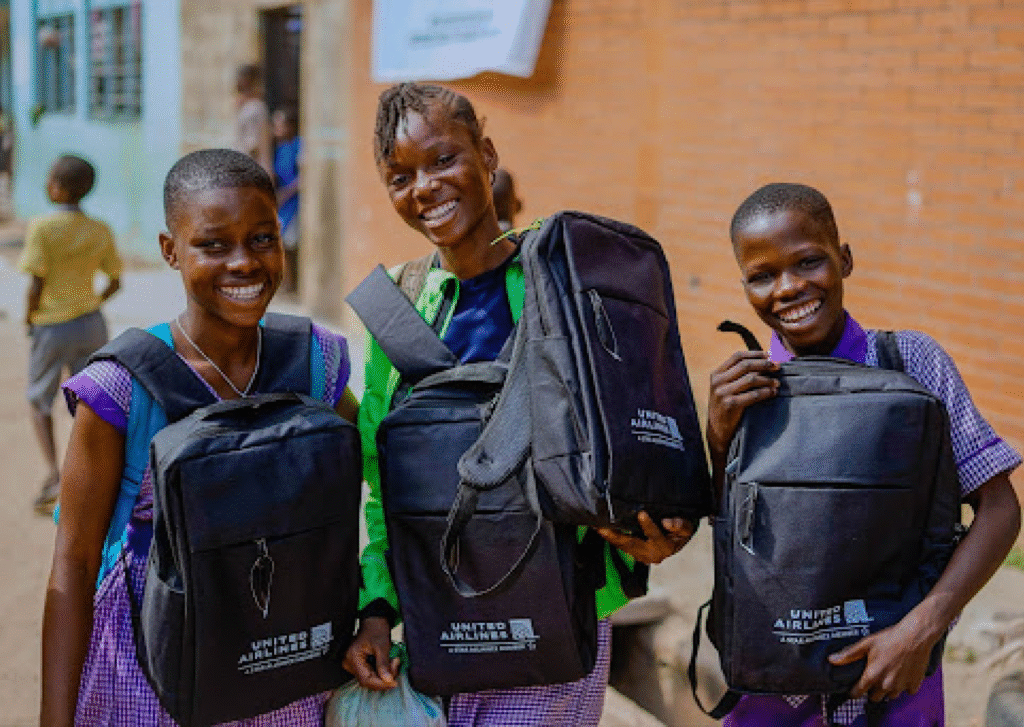
With the current economic hardship faced by many families across underserved communities in Nigeria, several children are finding it difficult to return to school as the new academic year begins. Parents whose children were seen at home on the first day of school complained that the lack of resources had prevented their children from resuming on the first day of school. Realities like this have led to the increasing number of drop-outs from primary and secondary school, and challenges like this are reasons why United Airlines, in partnership with Slum2School Africa, decided to spend three days between the 11th to 13th of September 2024, providing support to the most marginalized children across remote villages and urban slums in Lagos, Nigeria.
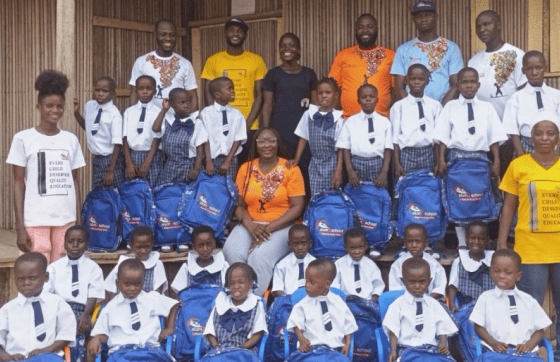
For three immersive days, a diverse team of United Airlines management and staff from the United States, United Kingdom, Ghana and Nigeria, together with Slum2School volunteers and staff, embarked on a journey across land and water to reach over a thousand children and provide them with needed school supplies, including school bags, exercise books, mathematical sets, pencil packs, crayon and several other learning materials, to kick off the new academic year. This wasn’t just a CSR activity but an adventure filled with passion, love, and the goal of transforming lives.
Day one began in Slum2School’s pioneer community in the Lagos mainland called Makoko, where Slum2School Africa has supported over 23,000 children, youths and families since 2012. The team from United Airlines spent the day visiting the children across the local schools, which Slum2School supports and also toured the community in what was described as a life-changing experience by Jermell Stills, a United Airlines Community Manager from the US. The children were very excited to receive their school supplies, and the community and school leaders equally showed deep appreciation for the very impactful gesture.
The following day took the team to the remote island of Saga in Epe, where they encountered firsthand the daily challenges children face, including a grueling 35-minute trek to and from school, often having to wade through water barefoot. Despite these hardships, the children greeted the team with enthusiasm, performing songs and cultural dances that brought the community to life. Their smiles stretched from ear to ear as they took turns collecting their new school materials, expressing gratitude and excitement to be returning to school fully equipped.
On the final day, the team was welcomed in the Tarkwa Bay community with traditional cultural performances, including energetic dances and spoken word poetry from the children. The expressions of gratitude were touching, as one student shared, “Thank you for not just giving us books, but for believing in us.”
Grace Harris, a member of the United Airlines team, shared her reflections after the final day in Tarkwa Bay. “I can see a lot of good learning going on here: vocational training, art, home economics, and so much more. These are activities many children out there don’t have access to, but Slum2School is making it possible. The joy and optimism these kids radiate is a big lesson for all of us.” She continued, “Visiting Saga and seeing the reality of how these kids struggle to commute to school every day shows how much they value education. When they’re empowered with the right tools, they can truly become whatever they aspire to be.”
The event was more than just about distributing backpacks, writing materials and school supplies; it was about creating moments of joy and connection. Refreshments were shared, and the children had time to bond with the volunteers through mentorship sessions, reinforcing the message that education is not just about school, it’s about a community that cares.
By the end of the journey, the volunteers and partners, though physically tired, were filled with a sense of accomplishment. Oluwatomi Bola-Sadipe, the Country Sales Manager for Nigeria, Ghana, and South Africa at United Airlines, who led the United Airlines team, expressed her gratitude to everyone involved. “What seemed like a mission impossible is now a mission accomplished,” she remarked, appreciating every single person who contributed to the success of the event.
Orondaam Otto, the founder and Executive Director of Slum2School Africa, also shared his heartfelt gratitude to the United Airlines team, volunteers, and everyone who made the journey possible. “We’ve touched many lives on this journey, but there’s still so much more to do,” Orondaam shared. “Let’s continue to come together, because there are millions of children waiting for their chance to be seen, heard, and supported.”
The collaboration between Slum2School and United Airlines proves that with the right partnerships and unwavering passion, we can not only equip children with the tools they need for school but also inspire them to dream bigger.