Maryam Alade - The Girl Who Found Her Voice And Gave Her Community a New One
In Makoko, the floating city of narrow bridges, wooden homes, fishing nets, and endless resilience, a 12-year-old girl once stood quietly inside her JSS1 classroom at Wesley Girls Junior Secondary School. It was Open Day, and teachers called out the names of students who performed well academically. Five students stood. Among them was a slender girl with bright eyes and a shy smile: Maryam Alade.
Slum2School volunteers had come to check on their beneficiaries. And that day, they invited the top-performing students for a mentorship session in Makoko. Maryam almost didn’t go. She had never spoken into a microphone before. She had never imagined herself in rooms outside her neighborhood. But she was curious, and curiosity, as it turned out, would become her compass.
The Day That Changed Everything
At her first mentorship session, she sat quietly at the back. But something about her presence caught the attention of Slum2School’s founder, Orondaam Otto. Her eyes were observant, her words – when she finally spoke – were thoughtful and unusually mature for a 12-year-old.
“She has potential,” he said.

He invited her back the following week, then the week after. Soon she was attending every Saturday session, raising her hand more, speaking more confidently, discovering new sides of herself.
Then came a moment that would define her future.
Mr. Otto asked her to moderate a volunteer induction ceremony – in front of hundreds of adults.
Maryam’s heart raced. Her palms shook. She almost said no.
But she said yes.
When she held the microphone, her voice trembled for only a moment. Then it steadied. That day, a girl from Makoko, who once doubted whether her voice mattered, realized she could move a room.


She didn’t know it yet, but she was stepping onto a path that would carry her far beyond Nigeria’s shores.
A Quiet Revolution Begins
With her newfound confidence, Maryam began participating in competitions – STEM, storytelling, essay writing. She won the Mainland Authority Merit Award. She became runner-up in the Lagos State Merit Award. She collected medals from debates and academic challenges. She discovered basketball and dreamed of representing Nigeria someday.
Yet her world was still Makoko – water beneath her feet, long wooden walkways, her parents and grandparents in their tiny home, the laughter of her siblings echoing through the floating neighborhood.
“I wanted more,” she said, “not for myself alone, but for every girl who looked like me.”


In 2018, Maryam stood on the TEDxLagos stage. Then she appeared on Arise TV. She spoke at a UNICEF program. She held her own at The Platform Nigeria – one of the country’s most influential national stages.
People listened.
And for the first time, Maryam realized she wasn’t just speaking;
she was representing – her family, her community, her generation.
Soon, an unexpected opportunity arrived through the Slum2chool program: a full scholarship to Word of Faith School in Abuja.
A girl from Makoko was moving to the one of the top schools in the nation’s capital to pursue a future she once didn’t believe she deserved.
Becoming One of Abuja’s Best
In Abuja, Maryam flourished.
She excelled in Government, History, Economics, Civic Education, Tourism – winning award after award. Teachers adored her; students admired her. Her cumulative average reached 97.5%.
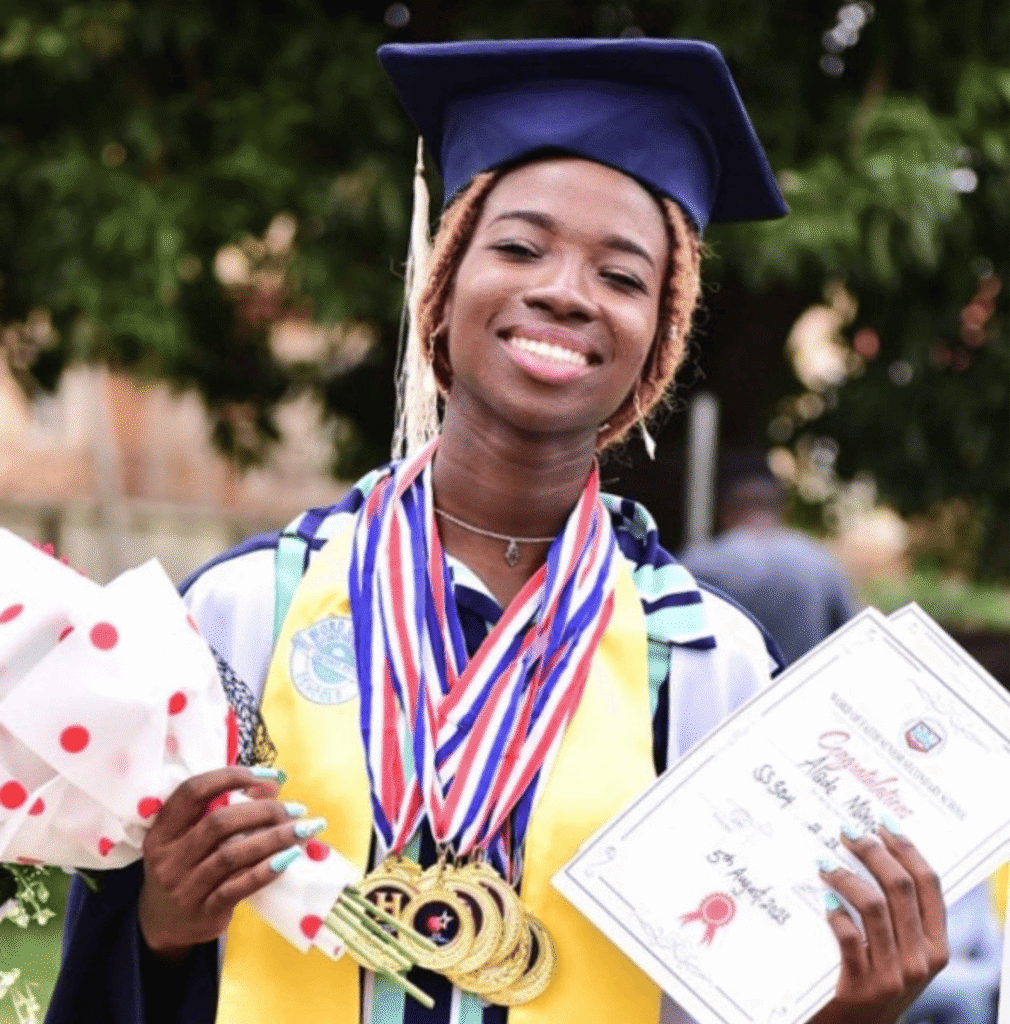
She became the Best Graduating Student.
She became the Best Female Basketball Player.
She became a school leader, a mentor to classmates, a beacon of consistency and humility.A Slum2School volunteer who attended her graduation said:
“Watching her pick up award after award…
I felt like a parent.
She came from a community where girls are often overlooked,
and here she was, outshining kids from elite families.
I cried. We all did.”
Discovering Her Purpose
In 2023, after graduating, Maryam returned to Lagos for a short internship at Slum2School. It was there she discovered her passion for program management, logistics, and creating opportunities for others.
She wanted to help build systems that make education accessible for every child, not just the lucky few.
So she applied to the African Leadership Academy (ALA) in South Africa – one of the most selective schools on the continent.
Out of over 3,000 applicants,
Maryam was selected as one of only 100 students.
In South Africa, she learned what it meant to be African, not just Nigerian. Her identity blossomed alongside peers from 48 countries. She deepened her love for sports, strengthened her leadership capacity, and sharpened her voice.
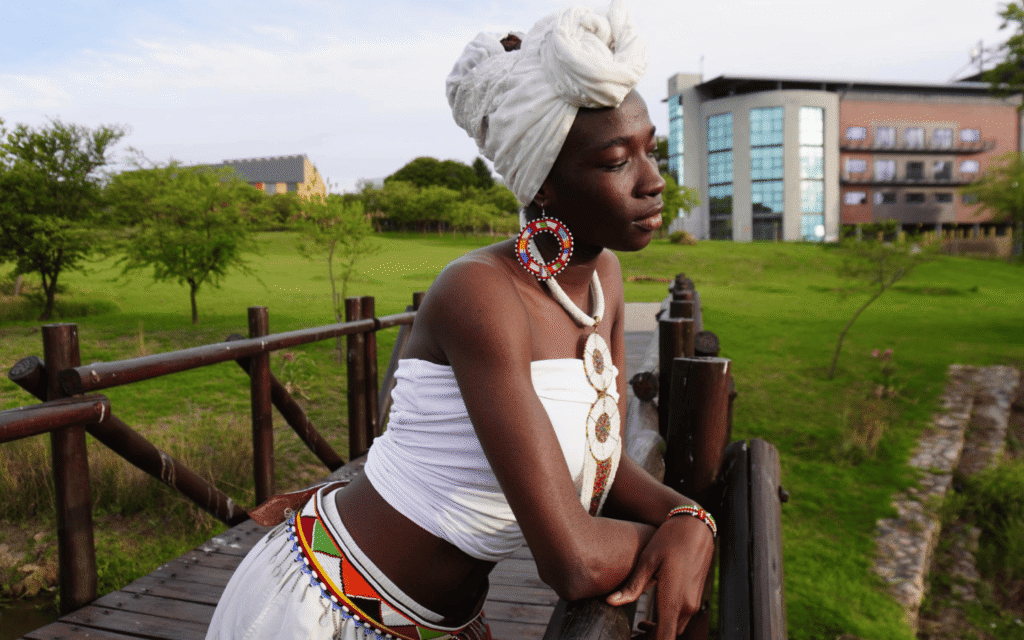


And she found a new dream:
“I want to become a diplomat,” she says.
“Speaking about problems brings temporary help.
Policies, systems, and structures create lasting change.
I want to be a voice — but also an instrument for change.”
A Bridge Between Makoko and the World
Today, Maryam leads girls at empowerment events, including delivering keynote speeches at national conferences like the Bloom Africa event. She remains deeply tied to Makoko, mentoring younger learners and inspiring them to believe in themselves.

She is proof that talent exists everywhere – opportunity does not.
And she embodies the truth that Slum2School has championed for years:
When one child gets a chance, an entire community gets hope.
Maryam’s Journey Continues
Maryam is now in South Africa, studying at ALA, planning the next stage of her life — university, global leadership, and eventually diplomacy.
And she still carries Makoko with her.
She still remembers the mentors who believed in her.
She still believes every child deserves what she received – a chance to learn, grow, and rise.
“I know where I come from,” she says.
“But I also know where I’m going.
And I’m going back – to lift others with me.”
Her story is not just her own.
It is the story of every child waiting to be seen.
Every girl waiting to be heard.
Every community waiting for a champion.
Maryam is no longer just a girl from Makoko.
She is a leader.
A storyteller.
A global citizen.
A future diplomat.
And she is just getting started.