Tope Iroko - My work connects my community to the world

In 2012, Tope was just 15 years old. Born in Makoko but living in a small slum in Ikate on Lagos Island, he would often return to the mainland to help children find a path to school, walking from house to house, fueled by nothing more than a fierce belief that every child deserved a chance.


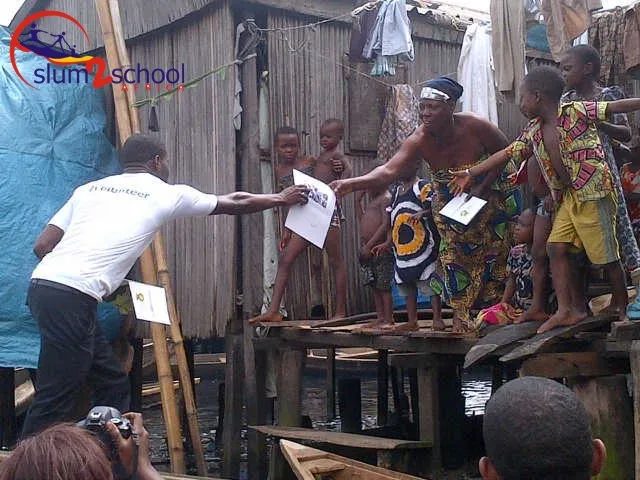
On one of those ordinary days in Makoko, he saw an unusual crowd gathered on the waterfront. Curious, he pushed forward. At the center was a young man, Orondaam Otto, trying earnestly to explain Slum2School’s mission to enroll out-of-school children. But English was a barrier, and the message wasn’t landing.


Tope stood in that gap.


Without hesitation, he stepped forward and asked if he could interpret. His voice became the channel the community needed. His presence instantly bridged what language had separated. At the end of that day, phone numbers were exchanged, not knowing that this simple act would spark a partnership that would reshape thousands of lives.

From that moment, Tope became a link between Slum2School and the Makoko Community.
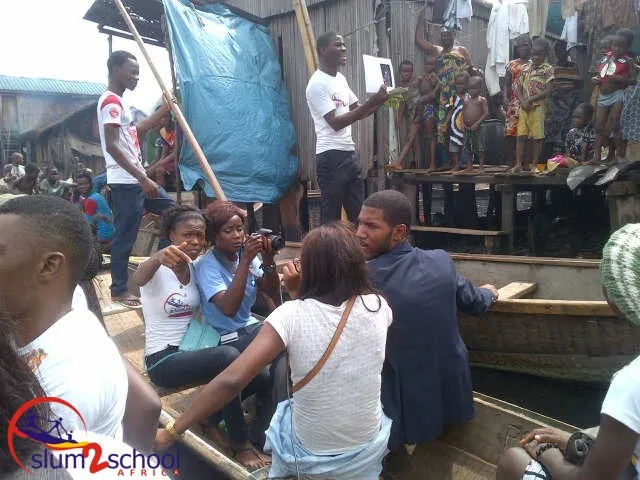
For a full year, Tope paddled the team through the narrow waterways, guiding volunteers from house to house. He knew the paths, the families, the fears, the hopes. He knew the children who wanted to learn but lacked opportunity. And he knew how to reach them.


Soon, Slum2School entrusted him with more responsibility. He was given volunteer recruitment forms-one for himself and many for others. Tope returned with 60 sign-ups, evidence of a mobilizer with extraordinary influence.


He wasn’t just a helper. He was a leader emerging from within.


Driven by Passion and Purpose

For years, Tope worked tirelessly, enrolling children, visiting homes, supporting parents, and mobilizing neighbors to care. Rain or shine, Tope showed up.


His commitment grew so deep that he eventually moved back to the waterside of Makoko.


“I did it so that I could use the boat to take the children from the waterside to school,” he shares. “And so I could go around the community and make sure every child actually goes to school.”


This wasn’t a job. This was purpose.


From Volunteer to Community Officer

In 2017, Tope officially transitioned into the role of Slum2School Community Officer. But unofficially, he had been one long before.

Today, he is a first point of contact for parents, a trusted support for students, key liaison with community leaders, a strong anchor for PTA meetings, logistics, and school transitions.
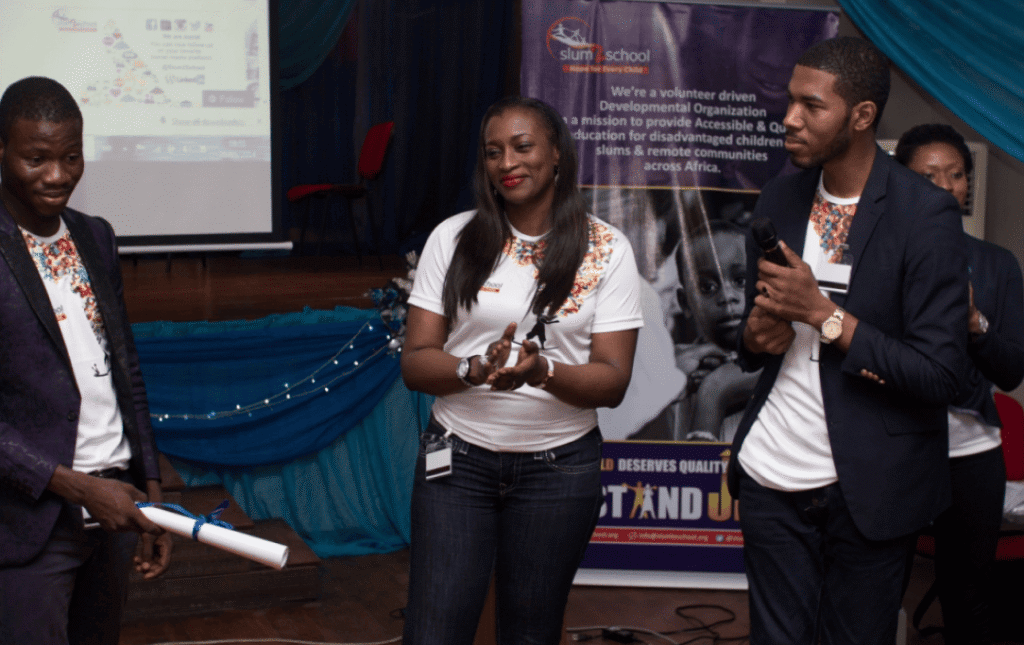
Tope once hoped to become a medical doctor; he trained after hours at a local clinic and even attended a medical school in the Benin Republic. But at every turn, he found himself drawn back to the children in his community.


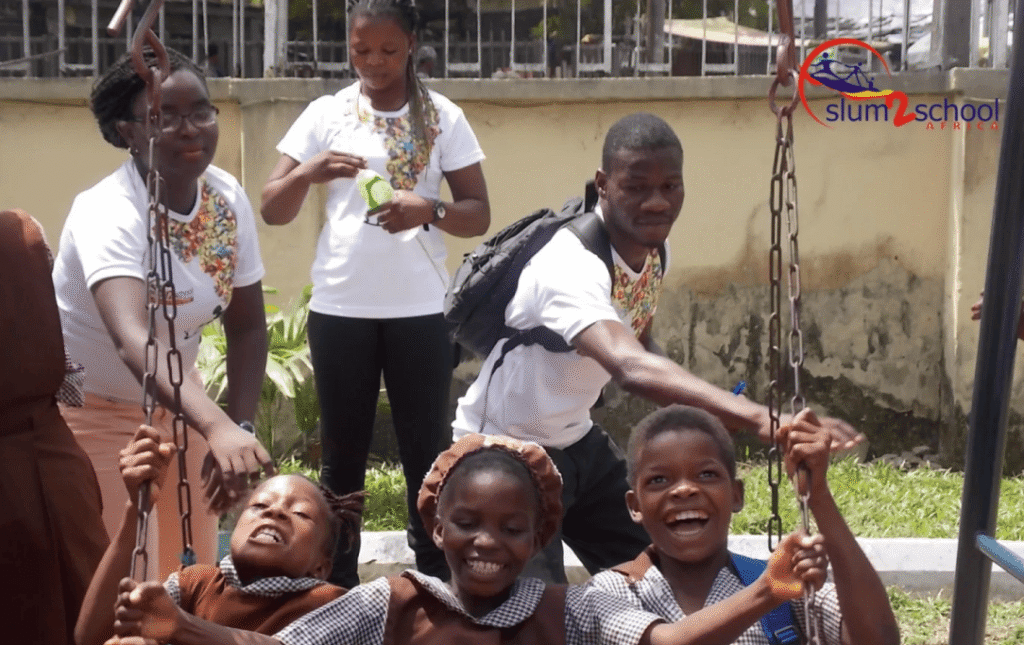
“When it comes to children in my community, I will always be there,” he says quietly. “I go for all their open days, all their meetings. I’m passionate. I do it for the passion I have.”


A Transformed Community And A Transformed Life


Tope has witnessed Makoko change before his eyes.

  • Parents who once disregarded school now insist their children attend.
  • Children speak better, dream bigger, and push further.
  • Enrollment numbers have risen beyond what he ever imagined.
  • Teachers now recognize him as he walks in with new learners, children who follow him with confidence and hope.

And as the community grew, so did he.


“Working with Slum2School has helped me focus on my passion,” Tope reflects.

“I know what I faced when I was schooling-that is what drives me. Before I met the Slum2School team, I only showed up halfheartedly. I could only register children in primary school. But now, I have reached numbers I couldn’t have imagined.”
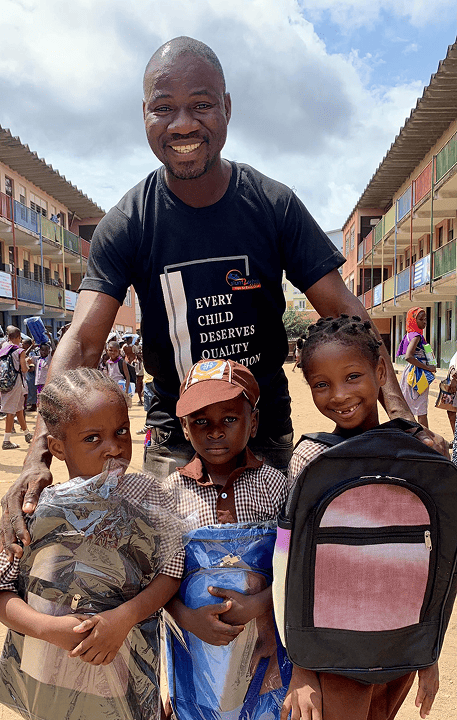
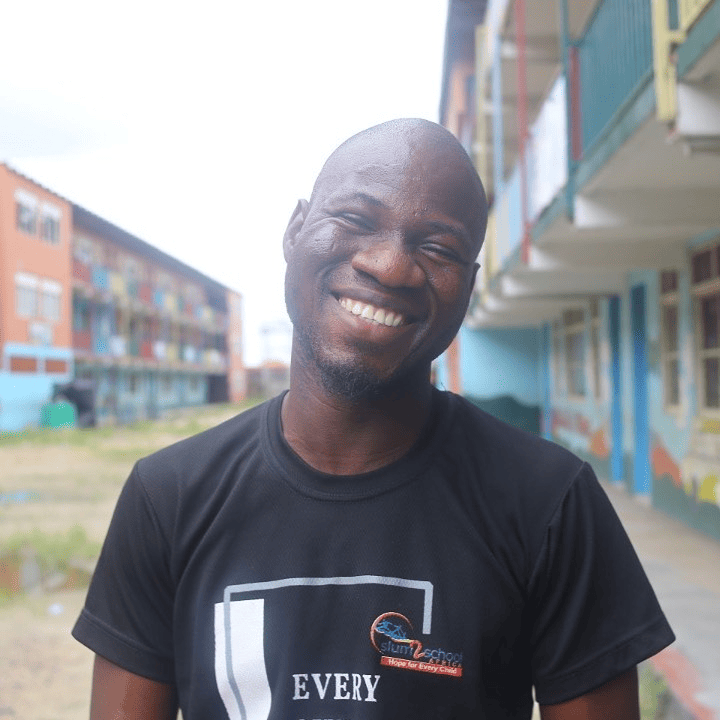
Leadership trainings, volunteer summits, and mentorship programs have shaped him, refining not only his skills, but his sense of possibility.

“I can go beyond where I am,” he says with quiet pride. “Nothing is stopping me.”


The Power of One

Tope’s story is the story of Makoko.

It is the story of Slum2School’s model-empowering communities from within.

It is the story of what happens when one young person decides to bridge hope into reality.


He is no longer just the boy who interpreted a message.
He is now the man transforming a community.
A reminder that sometimes, the biggest change begins with a single voice that chooses to speak up.
YOU CAN MAKE A DIFFERENCE IN THE LIVES OF CHILDREN IN NEED

Help support the education of children across Africa.

Pledge a Birthday

Pledge a Birthday

References

  1. Global Education Monitoring Report Team (2016). Education for people and planet: creating sustainable futures for all.
  2. Comms, D. (2021). The ripple effects of investing in girls’ education. Plan International Australia.
  3. Comms, D. (2021). The ripple effects of investing in girls’ education. Plan International Australia.
  4. Comms, D. (2021). The ripple effects of investing in girls’ education. Plan International Australia.
  5. Global Education Monitoring Report (2023). 244M children won’t start the new school year.
  6. World Bank. (2019). Ending learning poverty: What will it take?
  7. Fatunmole, M. (2023). Key data on early childhood education in Nigeria. The ICIR- Latest News, Politics, Governance, Elections, Investigation, Factcheck, Covid-19
  8. Enoch, A. (2024) Quality education delivers growth – but Africa’s scorecard remains poor. ISS Africa.
  9. UNESCO. (2022). 244 M children won’t start the new school year. Paris: UNESCO.
  10. Fatunmole, M. (2023). Key data on early childhood education in Nigeria. The ICIR- Latest News, Politics, Governance, Elections, Investigation, Factcheck, Covid-19.
  11. World Bank. (2019). Ending learning poverty: What will it take?. World Bank.
  12. Quality education delivers growth – but Africa’s scorecard remains poor | ISS Africa. (n.d.). ISS Africa.
  13. Heminway, J., & Heminway, J. (2023). Why Becoming Educated is Hard in Sub-Saharan Africa – Especially for Girls – The Water Project. The Water Project.
  14. UNICEF, (2021), Transforming Education in Africa.
  15. World Economic Forum. (2023), How Africa’s youth will drive global growth.

Every sponsorship supports:

  • Construction: Eco-friendly school facilities built with locally sourced, sustainable materials

  • Innovation: Solar power, rainwater collection, biogas, gardens, and internet access.

  • Learning & Support: Scholarships, teachers, health services, and psychosocial care.

  • Sustainability: Training, monitoring, and integration into public systems.

9

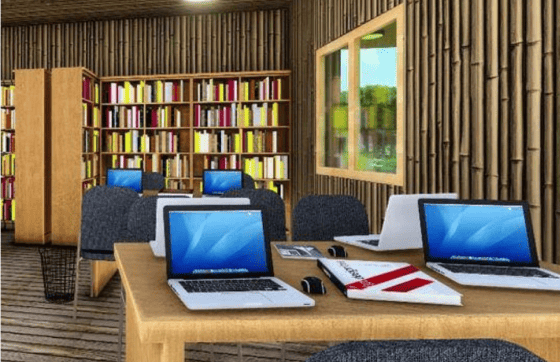
Library & Innovation Lab

Every Green Academy includes a library, STEM and Innovation lab, giving children access to books, technology, and digital resources. This opens doors to coding, research, and global learning experiences that prepare them for the future.

8

Biogas Systems

Waste from the school is converted into biogas through a clean, closed-loop system. This provides safe cooking energy and powers the backup generator – reducing pollution, improving sanitation, and teaching children about renewable energy in action.

 
7

Full Annual Scholarships

Each Green Academy provides 250+ underserved children with free, high-quality education. Scholarships cover tuition and also books, meals, healthcare, psychosocial support, and skills development, ensuring every child has the tools to thrive.

6

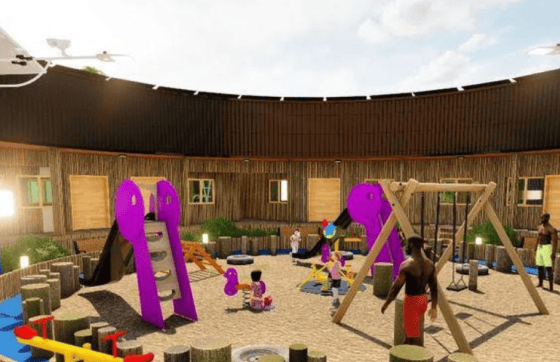
Open-Air Design

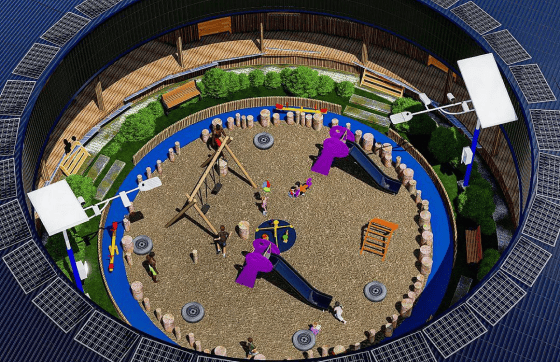
Classrooms are designed with circular, open-air structures that maximize natural airflow and light. This reduces heat, lowers energy use, and creates healthier learning environments, without the need for costly air conditioning.

 
5

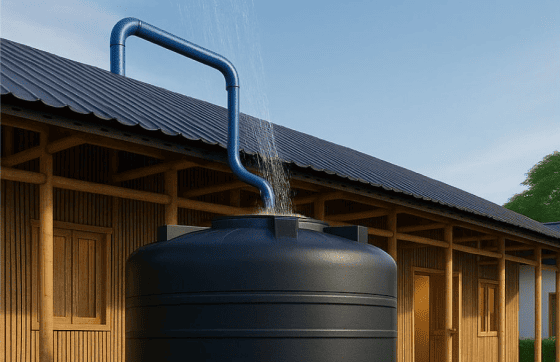
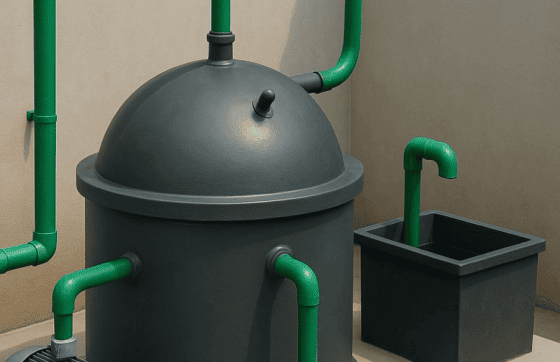
Rainwater Systems

Green Academies are built with rooftop rainwater collection systems. Rainwater is stored, filtered, and treated to provide safe drinking water for students, teachers, and the wider community-improving health and reducing time spent fetching water.

4

Gardens & Biodiversity

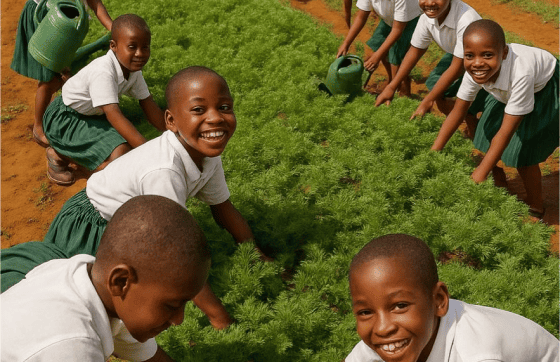
Outdoor gardens and biodiversity spaces make learning hands-on and holistic. Children grow food, study ecosystems, and learn sustainable
agriculture. These green spaces also support nutrition programs, providing fresh produce for students.

3

Satellite Internet

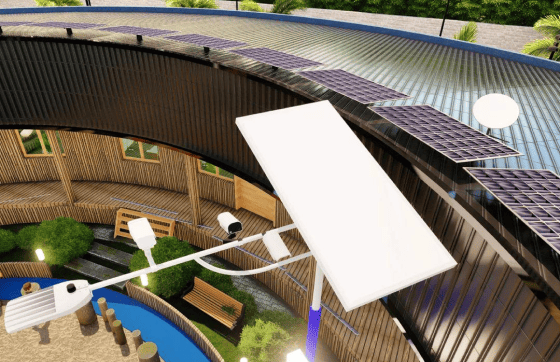
For many communities, Green Academies provide their very first internet connection. Through satellite technology, children gain access to digital learning, global knowledge, and virtual mentorship. It also connects teachers and families to new opportunities and resources.

 
2

Solar Power

Every Green Academy runs fully on clean solar energy. This ensures classrooms, labs, and digital tools stay powered without reliance on
unstable grids or generators. With solar, learning continues seamlessly, even at night or during power cuts.

1

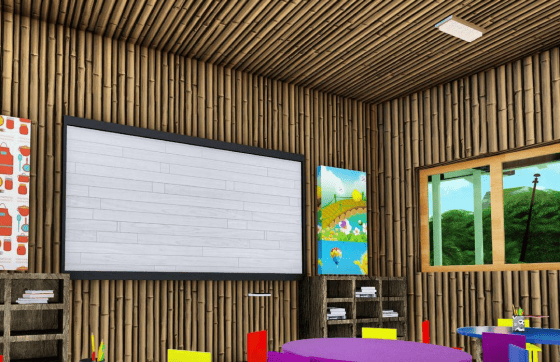
Built with sustainably sourced bamboo, reclaimed wood, and locally sourced materials- reducing carbon emissions while providing durable, safe spaces for learning. These materials are low-cost, renewable, and naturally cooling, perfect for Africa’s climate.