Slum2school brings #AthousandDreams to Tarkwa Bay
“Every child deserves a chance to dream and, in dreaming, they deserve to dream something bigger than themselves.”
– Awesu Williams
 
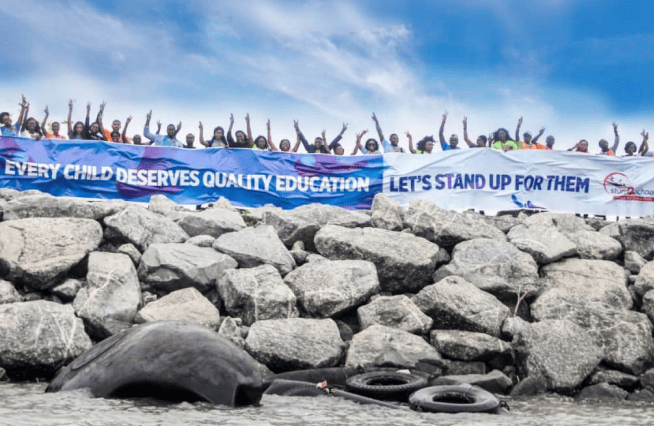
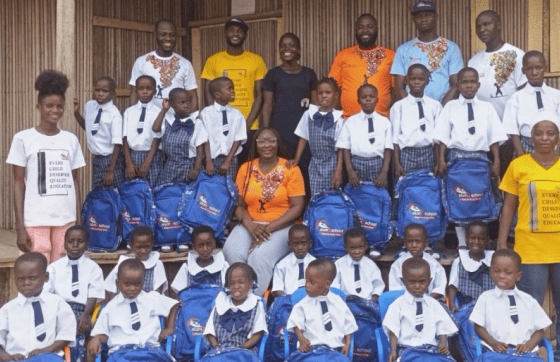
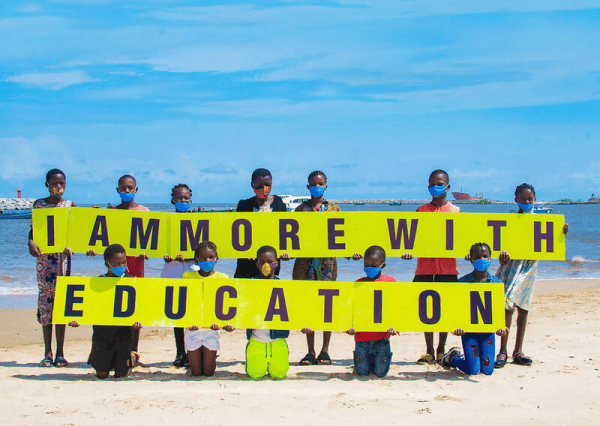
In echoing this fact, the management and volunteers of Slum2School Africa took out time to celebrate the 2018 World Literacy Day with kids from their adopted school at Takwa Bay. This was done in collaboration with food and beverage giants Cold Stone Creamery, Pinkberry and Domino’s Pizza.
 
Against all odds and the unsavoury weather, volunteers from Slum2School numbering over a hundred and collaborative partners stormed the Takwa Bay community bearing gift items and the message of hope through its #AThousandDreams campaign.
 
The fundraising project tagged A Thousand Dreams seeks to enrol 1,000 children in school in the new academic session starting from September 2018.
 
According to Slum2School founder Otto Orondaam in his opening remarks, this comes on the heels of last year’s successful campaign where 341 children were enrolled on board into primary school.
 
He thanked partners across all sectors for taking the lead and believing in the vision of helping to reduce the scourge of out-of-school children. He further remarked that over 500 children from the community will be given a chance at quality education.
 
Further into the event, the kids were the centre of attraction, with one of them reciting the national anthem to kickstart the programme. Afterwards, they engaged the audience with their brilliance in discussing the meaning and relevance of “Literacy”.
 
The high point of the programme came when parents and caregivers — many of whom have never had access to education — brought their kids to be profiled for the next phase of enrolment into school.
 
Under the pouring rain, volunteers kept on in good faith, helping to document different cases of children to lay the foundation towards a more productive future. In the end, delicious packages of pizza and ice cream were shared in the atmosphere filled with love, excitement and camaraderie. Also, pictures were taken bearing the spirited passion for the #AThousandDreams.
 
Indeed the 2018 World Literacy Day celebration came with good tidings for the Slum2School management, volunteers and partners, seeing the happiness on the faces of her community members.
YOU CAN MAKE A DIFFERENCE IN THE LIVES OF CHILDREN IN NEED

Help support the education of children across Africa.

Pledge a Birthday

Pledge a Birthday

References

  1. Global Education Monitoring Report Team (2016). Education for people and planet: creating sustainable futures for all.
  2. Comms, D. (2021). The ripple effects of investing in girls’ education. Plan International Australia.
  3. Comms, D. (2021). The ripple effects of investing in girls’ education. Plan International Australia.
  4. Comms, D. (2021). The ripple effects of investing in girls’ education. Plan International Australia.
  5. Global Education Monitoring Report (2023). 244M children won’t start the new school year.
  6. World Bank. (2019). Ending learning poverty: What will it take?
  7. Fatunmole, M. (2023). Key data on early childhood education in Nigeria. The ICIR- Latest News, Politics, Governance, Elections, Investigation, Factcheck, Covid-19
  8. Enoch, A. (2024) Quality education delivers growth – but Africa’s scorecard remains poor. ISS Africa.
  9. UNESCO. (2022). 244 M children won’t start the new school year. Paris: UNESCO.
  10. Fatunmole, M. (2023). Key data on early childhood education in Nigeria. The ICIR- Latest News, Politics, Governance, Elections, Investigation, Factcheck, Covid-19.
  11. World Bank. (2019). Ending learning poverty: What will it take?. World Bank.
  12. Quality education delivers growth – but Africa’s scorecard remains poor | ISS Africa. (n.d.). ISS Africa.
  13. Heminway, J., & Heminway, J. (2023). Why Becoming Educated is Hard in Sub-Saharan Africa – Especially for Girls – The Water Project. The Water Project.
  14. UNICEF, (2021), Transforming Education in Africa.
  15. World Economic Forum. (2023), How Africa’s youth will drive global growth.

Every sponsorship supports:

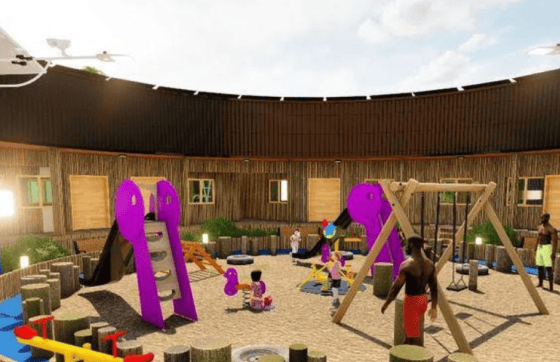
  • Construction: Eco-friendly school facilities built with locally sourced, sustainable materials

  • Innovation: Solar power, rainwater collection, biogas, gardens, and internet access.

  • Learning & Support: Scholarships, teachers, health services, and psychosocial care.

  • Sustainability: Training, monitoring, and integration into public systems.

9

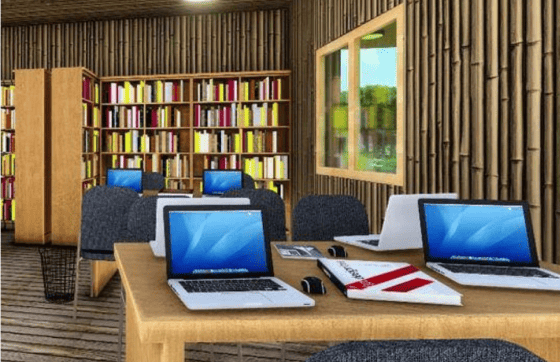
Library & Innovation Lab

Every Green Academy includes a library, STEM and Innovation lab, giving children access to books, technology, and digital resources. This opens doors to coding, research, and global learning experiences that prepare them for the future.

8

Biogas Systems

Waste from the school is converted into biogas through a clean, closed-loop system. This provides safe cooking energy and powers the backup generator – reducing pollution, improving sanitation, and teaching children about renewable energy in action.

 
7

Full Annual Scholarships

Each Green Academy provides 250+ underserved children with free, high-quality education. Scholarships cover tuition and also books, meals, healthcare, psychosocial support, and skills development, ensuring every child has the tools to thrive.

6

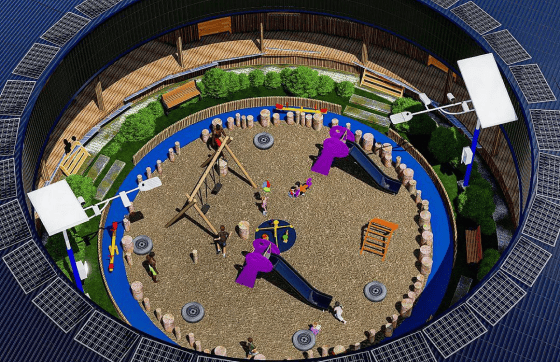
Open-Air Design

Classrooms are designed with circular, open-air structures that maximize natural airflow and light. This reduces heat, lowers energy use, and creates healthier learning environments, without the need for costly air conditioning.

 
5

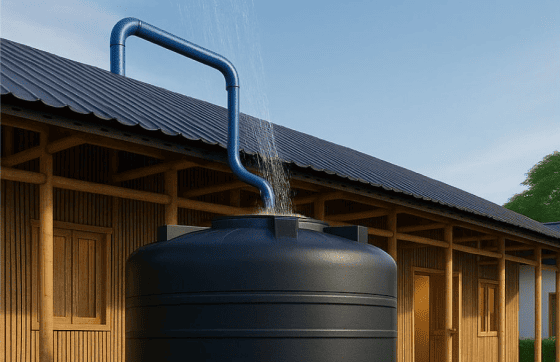
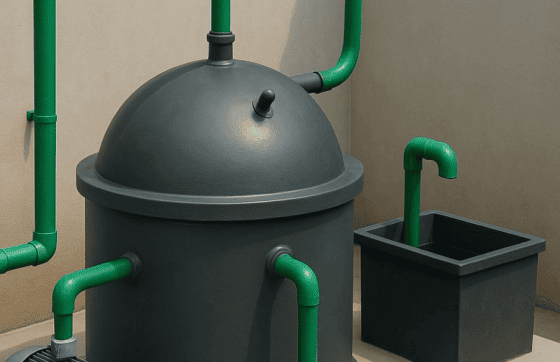
Rainwater Systems

Green Academies are built with rooftop rainwater collection systems. Rainwater is stored, filtered, and treated to provide safe drinking water for students, teachers, and the wider community-improving health and reducing time spent fetching water.

4

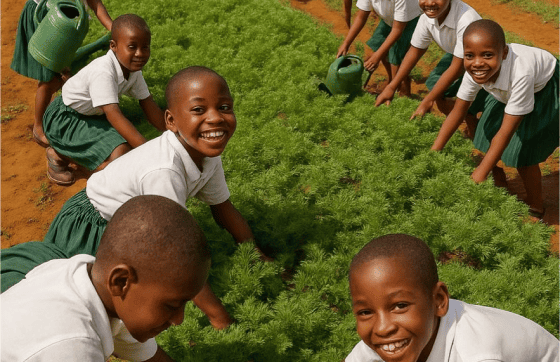
Gardens & Biodiversity

Outdoor gardens and biodiversity spaces make learning hands-on and holistic. Children grow food, study ecosystems, and learn sustainable
agriculture. These green spaces also support nutrition programs, providing fresh produce for students.

3

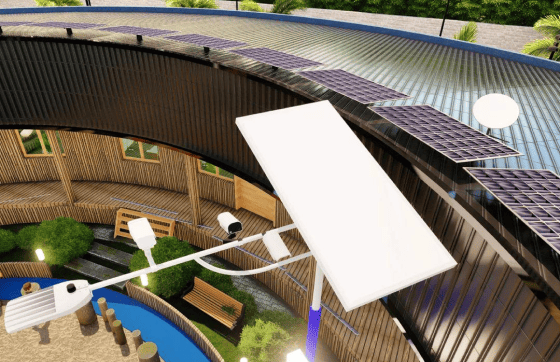
Satellite Internet

For many communities, Green Academies provide their very first internet connection. Through satellite technology, children gain access to digital learning, global knowledge, and virtual mentorship. It also connects teachers and families to new opportunities and resources.

 
2

Solar Power

Every Green Academy runs fully on clean solar energy. This ensures classrooms, labs, and digital tools stay powered without reliance on
unstable grids or generators. With solar, learning continues seamlessly, even at night or during power cuts.

1

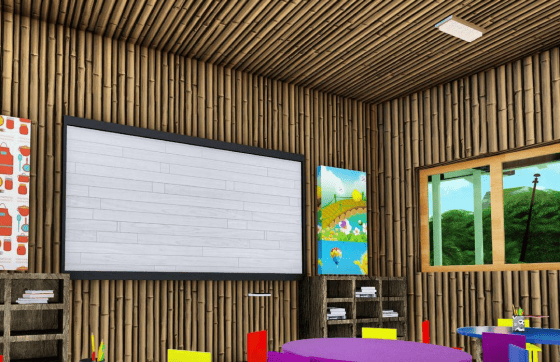
Built with sustainably sourced bamboo, reclaimed wood, and locally sourced materials- reducing carbon emissions while providing durable, safe spaces for learning. These materials are low-cost, renewable, and naturally cooling, perfect for Africa’s climate.